Gertrude Jenner – Suffragist

REDRESSING THE BALANCE


On occasion of her death in April 1894 at the age of 69, the popular Evening News, while recognising her great charitable work, described Wenvoe’s Gertrude Jenner as a picturesque, eccentric and pathetic character. She was in fact a fearsome crusader for women’s issues and good causes. Her campaigns for political, legal and social justice brought her fame and influence far beyond the tiny hamlet she called home.

Gertrude Jenner was born in 1835 and was the unmarried daughter of Robert Francis Jenner of Wenvoe Castle. Miss Jenner’s activities were regularly reported in the columns of the Barry Dock News, Western Mail and Cardiff Times. The Evening Express described her as a ‘quaint little old lady with a keen, but not unkindly face.’ Never afraid of a struggle, she was a familiar figure at the High Court of Justice in London, where she appeared year on year, unsuccessfully fighting to prove her claim to part of the Wenvoe Castle Estate. She invariably appeared carrying her signature handbag and a good sized umbrella. On one occasion she occupied three hours of the court time of Mr Justice Grantham, who patiently listened to the ‘talkative little woman bedecked in frills and ribbons.’


Miss Jenner will though be remembered for much more than campaigning on her own behalf. She worked tirelessly to raise money for colliers following mining disasters, carried out voluntary work among women in colliery districts and campaigned ceaselessly for improved wages and living conditions in the mining communities. She successfully petitioned the authorities to reduce the sentences of women convicted of capital offences and was proud of having saved at least 14 women from the gallows.

Gertrude Jenner was ahead of her time in being one of the first suffragists in Wales. She was a formidable and persuasive speaker. On 25 February 1881, she presided over a meeting held in Cardiff Town Hall to ‘consider means of promoting interest in Cardiff’ towards female voting rights. This was a preliminary to a larger

meeting that was held on 9 March, attended by local dignitaries and chaired by the Mayor of Cardiff. Miss Jenner spoke passionately at these meetings, arguing that everyday life proved widows and spinsters, who contributed to the rates and taxes of the country, were too often victims of tyranny and oppression. The vote would help to redress the balance. There was loud applause when Miss Jenner exclaimed that ‘women would make as good a use of their votes as men did.’

This of course, was a small step in the long struggle by the suffragists in which many Welsh men as well as women played a part. The campaign finally came to fruition with the passing of the Representation of the People Act 1918, enfranchising all men, as well as all women over the age of 30 who met minimum property qualifications. While this gave the vote to 8.4 million women, it was not until 1928 that the law was extended, granting the vote to all women over 21, on equal terms with men.

One final anecdote sums up Miss Jenner’s determination to fight for women and social justice. In 1896 she wrote a letter to the Home Secretary, bringing attention to the horrific exploitation of a fifteen year old Cardiff girl employed to go up in a balloon parachute at a public entertainment. The unfortunate teen was drowned when the balloon crashed into the Bristol Channel. In her letter, Miss Jenner called for an Act of Parliament to outlaw such ‘dangerous, discreditable and demoralising occupations for children of such tender years, and for the simple but glaring purpose of making money and pandering to the wishes of sensational and idle-minded sightseers.’

Gertude Jenner was buried in our local churchyard and her grave can be found barely 100 yards from her cottage across the street. The Evening News reported ‘Miss Jenner lived at Ty Pica, a cottage on the Wenvoe Estate and it was there she ended her queer, troublous little life.’ Perhaps it takes a former Spice Girl to put this description into context. ‘It’s really important to remember that most people in the public eye are human for a start and a lot of things you read in the media get slightly misconstrued and manipulated.’ (Geri Halliwell)


ST DAVID – WALES AND BEYOND

ST DAVID – WALES AND BEYOND

St David was born in Pembrokeshire around 500 AD to Sant, a prince of Cardigan, and St Non, the daughter of a chieftain. Little is known about his life. He was brought up near Aberaeron and is said to have been baptised by St Elvis of Munster. David was educated at a monastery under St Paulinus who, recognising his great potential to spread the word of Christianity, sent David on pilgrimages around Wales, Cornwall, Britanny, Ireland and Jerusalem.

St David died on March 1st, 589. His remains were buried in St David's Cathedral. Although his shrine was later removed by Vikings, a new shrine was constructed there in the 13th Century.

It is said St David founded 12 monasteries and performed several miracles. Canonised by Pope Callixtus in 1120, St David has been recognised as patron saint of Wales since the 12th century.

St David’s Day is celebrated by Welsh societies around the world. St David’s Day celebrations are still held by the descendants of those who emigrated from Wales to Patagonia in 1865.


• While preaching to a crowd in the West Wales village of Llanddewi Brefi, David is said to have performed his most famous miracle. The crowd were finding it difficult to see and hear the sermon, when a white dove landed on David’s shoulder. As it did, the ground on which he stood is said to have risen up to form a mighty hill, making it possible for the gathering crowd to finally see and hear him. The dove became St David’s emblem, often appearing in his portraits and on stained-glass windows depicting him.

• Monasteries founded by St David were known for their extreme austerity. Monks abstained from worldly pleasures and carried out hard farming duties on a basic diet. Some monks were so fed up of St David’s harsh regime they even tried to poison his bread. Fortunately he survived.

• The 17th century diarist Samuel Pepys noted how Welsh St David’s Day celebrations in London would spark wider counter-celebrations among their English neighbours, with life-sized effigies of Welshmen being symbolically lynched.


Welsh tradition says that during a battle against the Anglo-Saxons, David advised the Welsh warriors to wear a leek in their hats or armour so that the warriors might distinguish themselves from their enemies. Ever since then, the Welsh wear leeks every March 1st in memory.


A Turbulent Time

STEPPING BACK TO A TURBULENT TIME


North-west of Tredegar, on the edge of the Brecon Beacons National Park, our local walking group came across the famous Chartist Cave. In the autumn of 1839 this remote cave was reputedly used by Chartist rebels to plan, make and stockpile weapons in advance of their famous protest march on Newport in November of that year.

At that time, in stark contrast to the iron masters and coal owners, the wages, living and working conditions of industrial labourers were appalling. The aim of the Chartists was to gain reforms by securing political rights and influence. The Chartists presented three petitions to Parliament – in 1839, 1842 and 1848 – but each of these was rejected. The first in 1839 claimed to have some 1.3 million signatures but like the others contained many forgeries.


CHARTIST DEMANDS

1. a vote for all men (over 21)

2. the secret ballot

3. no property qualification to become an MP

4. payment for MPs

5. electoral districts of equal size

6. annual elections for Parliament


Chartists attack the Westgate Hotel

The march on Newport took place on 4 November 1839. Chartists marching from Blackwood, Nantyglo and Pontypool were delayed by a storm, giving the authorities ample time to prepare an armed response. When the Chartists eventually converged on the Westgate Hotel, a bloody battle ensued. Within half an hour, 22 protesters lay dead or dying and upwards of 50 had been injured. An eyewitness report spoke of one man, wounded with gunshot, lying on the ground, pleading for help until he died an hour later. Bullet holes remain in the masonry of the hotel entrance porch to this day. The Chartist leaders John Frost, Zephaniah Williams and William Jones were found guilty of high treason, becoming the last men in Britain to be sentenced to be hanged, drawn and quartered. However, following a huge public outcry the sentences were commuted to transportation for life.


Some historians doubt that the cave was ever used by the Chartists. Many a local iron works would have been far more accessible and suitable for forging weapons and it seems unlikely that such an out of the way place would have been chosen to store them. Even so, for many the cave still has symbolic significance. A plaque at the entrance commemorates the role of the Chartists in helping to secure democratic rights. Five of the six Chartist demands were realised, with only annual elections for Parliament not eventually adopted.

We are often reminded of the events of the Newport Rising. In the recent ITV series Victoria, Queen Victoria is depicted as ordering the drawing and quartering of the ringleaders to be commuted to deportation, after learning that one of the men is the nephew of a member of her household staff.


DEVELOPMENT OF CARDIFF AIRPORT


The history of the airport extends back to the1942 when the Air Ministry requisitioned land for training Spitfire pilots. After WW2 the airfield was abandoned. The man who decided Rhoose could be the site of a new airport was David Rees-Williams (later Lord Ogmore). In1945 Rees-Williams became an MP; then when Minister of Aviation he identified a great need for a commercial Airport of international standards in south Wales. He told the House of Lords that a decision had to be taken whether to do nothing at all or whether Pengam Moors, the existing airport for Cardiff, should be improved or, thirdly, whether a new airport should be constructed.

Subsequently the Welsh Civil Aviation Consultative Committee proposed the Royal Air Force airfield at Rhoose. The Government accepted this proposal and the Ministry of Aviation promptly began converting the abandoned airfield into a civilian Airport.


Opening of new airport. In October 1952 the new airport was opened. Then civilian flights from the old Cardiff Municipal Airport at Pengam Moors were transferred to Rhoose in April 1954. In 1965 the Ministry of Aviation handed over the airport to Glamorgan County Council and was renamed Glamorgan (Rhoose) Airport. The council started a five-year plan to develop the airport including a new control tower, terminal building and runway extension.

1986 saw a further extension to the runway, attracting more business in the form of new-generation jet aircraft. The runway extension enabled the airport to handle 747 jumbo jets. This was instrumental in attracting the British Airways Maintenance facility to the airport. The airport is not only the main maintenance base for British Airways but also home to a variety of aerospace-oriented firms and colleges, and now is a major contributor to the economic development of the region.

The airport was privatised in1995 due to local authority re-organization. Later in 2013 the Welsh Government bought it for £52 million. There followed an investment of a £6 million route-development programme. In 2015 a major deal was signed with Flybe which saw the opening of a two aircraft base for their airline with a considerable number of new routes. In April 2017, Qatar Airways announced their plans to launch a service from Cardiff airport to Qatar and significant global markets via Qatar’s capital city in May 2018. This development is considered a game changer for the airport’s future.

BD


FROM DUNKIRK TO WENVOE

FROM DUNKIRK TO WENVOE

The film Dunkirk, currently on release in cinemas, tells the story of the Dunkirk evacuation between 26 May and 4 June 1940. This is the story of the miracle of Dunkirk – the evacuation of Allied soldiers from the beaches and harbour of Dunkirk in northern France, an evacuation code-named Operation Dynamo. In the film a group of soldiers manage to cross the English Channel to Weymouth and are placed on a train. The trains were known as ‘Dynamo Specials’ taking troops to temporary camps. It reminded me that Wenvoe played a part in Operation Dynamo, well in the receiving of Dunkirk evacuees at any rate, with the Wenvoe Camp that had been set up that year. A camp later used by the US Army between 1943-4 in the run-up to the D-Day campaign and later used for German and Italian prisoners of war (see ‘Wenvoe at War’). Wenvoe Camp occupied the site that would be occupied by the golf driving range and now the crematoria.

I’m not sure how long the camp was occupied by Dunkirk veterans, it appears to be occupied mainly by Royal Army Service Corps men as one letter dated 31 July 1940 to a Pte A J Hopkinson, gives the address as; ‘No. 2 Base Petrol Filling Centre, R.A.S.C., Wenvoe Camp’. A later letter to Pte Hopkinson is dated 9 October 1940. Another soldier; John Edwards, was also with the RASC, he recalled; ‘At St Malo docks, we drove the lorries into the sea and some threw in their weapons too …The ship set off for Weymouth (the journey took all day!) and we arrived there to be met by the Salvation Army who gave every man a tin of Bully beef, a tin of Mackerel, hard tack biscuits and a tin mug full of tea. …My wife (whose neighbour had helpfully told her that "we would never see any of them again") eventually got news that I was in a camp at Wenvoe in South Wales and my brother in Law (who lived in Newport) managed to find me and confirm that I had survived.’ Another RASC man was Pte Edward Anthony Clarke, whose story; ‘Tony Clarke's World War II’; ‘Jul-Sep 1940 – Tony's unit in a big camp under canvas at Wenvoe, 7 miles west of Cardiff, manning road-blocks and checking everybody's identity (why??), with Boer War Ross rifles and a Boys Anti-Tank Rifle …’ The story notes that in Oct 1940 Tony's unit was to move to winter quarters in Caerphilly.

The brother of the famous author C.S. Lewis; Major Warren Hamilton, would also spend time at Wenvoe. Before the war the two brothers had been inseparable, sharing their thoughts and observations on the countryside, literature, and the changing world. He was a noted scholar in his own right and had served in the First World War, being recalled to active service on 4 September 1939 and posted on 25 October 1939 to Le Havre. In May 1940 he was evacuated from Dunkirk and transferred to the Reserves on 16 August 1940. He then left Wenvoe Camp and headed for Oxford where he promptly joined the Sixth Oxford City Home Guard Battalion.

It would be interesting to know how much interaction was there between the camp and Wenvoe and if any readers can add anything please let us know. Parry Edwards has noted that in 1940 there were two weddings from the RASC Wenvoe Camp; one couple being Beryl Fairchild who married William Shakespeare of the RASC at St. Marys Church. No doubt these were engaged couples who had decided that with one of them having survived Dunkirk they should get married!

Stephen K. Jones


BBC WW2 People's War Lost in France, May/June 1940: With the RASC by John Edwards http://www.bbc.co.uk/history/ww2peopleswar/stories/45/a2598645.shtml

Tony Clarke's World War II, http://www.rogerclarke.com/Family/AW4/06/2/WWII.html

http://archiver.rootsweb.ancestry.com/th/read/GLAMORGAN/ 2004-08/1091645916


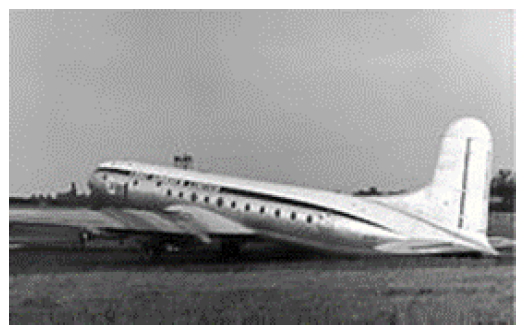
Llandow Air Disaster 12 March 1950


In the years after WWII there was a surge in demand for air travel. This was largely met with aircraft that had been sold off as surplus to requirements.

People began to realise that travel by aeroplane was something available to everyone, not just the rich.

A Cardiff entrepreneur chartered an aeroplane to fly from Landow airfield to Dublin for £10. Llandow was not a commercial airfield, though still operating for military use.

The Welsh team was on the brink of its first Triple Crown for nearly 20 years. Victories over England and Scotland set up a deciding match with Ireland. Thousands of supporters made the trip

The Saturday flight to Dublin on Saturday 11th was uneventful.  Wales won 6-3. Great! The boys celebrated until late.

Friends and families waiting to welcome fans home spotted the aircraft in the west. As the aircraft approached it seemed to be flying too low. Then with its undercarriage down the engines suddenly boosted causing the aircraft to stall and drop to the ground. 80 died with 3 survivors.

After a court of enquiry the Ministry of Civil Aviation announced that the probable cause of the accident was the luggage loading of the aircraft, which had moved the centre of gravity.

Whether or not luggage contributed to the crash, the weighing of luggage to this day stems from the crash. Rhoose Airport was created later, with a memorial stone in Sigginstone.

The death of the last survivor of 3 was reported in WalesOnline, May 2011.

BD

(A memorial plaque is erected in Siginstone on the road side near Park Farm, the site of the crash.)


Dyffryn House


Dyffryn House is the Victorian mansion house within the Edwardian listed gardens in St Nicholas. It is currently managed by the National Trust on a 50 year lease. The House Steward and research teams are always looking for information on the history of the site. The original collection owned by the Cory family was sold at auction in 1937. If any local people are aware of any pieces that were sold locally we would love to hear from you.

We would also be very interested to talk to anyone who has memories of working at the site from the 1980’s and before- with the option to carry out an oral history.

Please contact Christina at Christina.Hanley@ nationaltrust.org.uk or 07483926208.


WENVOE… A GLIMPSE FROM THE PAST. (PART II)


There was not a lot of entertainment the village, but we made our own fun, and everybody knew everybody, which is not the case today. When I go to the village, if I know two or three people to speak to, I am lucky. We had a dance in the old school about once a month. That was an event and great fun, and always a good night. Another big event was the fete at the Castle. Stalls of all kinds would be put up, and myself and friends, would have baskets with button holes of roses to sell, and we would have to dress for the part. The evening was the highlight – dancing on the green, in the moonlight till midnight.

It was then that all the gardeners were in demand, and we all looked forward to this. Lady Jenner had a cousin who was known to be a little bit eccentric, and she lived in Ty Pica Farm. She dressed like a gypsy, and all the school children were scared of her. Lady Jenner disowned her. Near the pub was a big pond, which is all filled in now, and has nice seats there, but a lot of watercress used to grow there, and Old Julia, as we all called her, would be there cutting the watercress and filling her basket and selling it. The children would shout over the wall "Old Julia" and she would chase them with her knife. We were really scared of her.

The milkman used to come every morning, milk straight from the Garn Farm. It would still be warm when he called. He would ladle it into your jug out of the churn. Quite a lot of people kept their own chickens and pigs. We were no exception, and always had a pig in the sty and bacon hung in the pantry. The pantry is still there and so are the hooks in the ceiling where the bacon used to be hung, but I'm afraid the pig sty was knocked down when my daughter and her husband built their house where it stood.

Trains used to be three up and three down a day. We would have to walk to Wenvoe Station to get a train to Barry and change at Cadoxton, if we were going to Cardiff. I used to work in Canton. I would cycle to Dinas Powys, get the train to Cardiff and then a tram to Canton. I would leave home on a Saturday at 8 o'clock in the morning and catch the 10 o'clock train home at night. My father would meet me at Dinas Powys and many a time he had to carry me on his back through flood waters and we would arrive home at quarter past eleven.

That was a normal Saturday's work. Often on a Christmas Eve, I have been serving a customer at half past one in the morning, and it was heaven help you if you let that customer go without buying something. It would be your cards for you, but through it all, as I say, we were happy.

One of my big enjoyments as a child was to help my brother, who worked on the Burdens Hill Farm. I loved the harvest time. I would ride on top of the loads of hay, and then ride up to the farm on the old horse's back, when the days toil was over, then I would go on the dray to Ely and get the grains for the animals. That was all great fun to me. The dray was a big old horse drawn cart and was the main means of transport in those days in the village of Wenvoe.

The little shop in the village was kept by a Mrs. Thomas and her two daughters, and she was a little bit on the mean side. I have seen her break a sweet in half to make the weight right. The Post Office was kept by a Mrs. Morgan and her daughter. The old lady lived to over 90 and the week before she died, she was delivering telegrams, which again had to be delivered by hand. The old lady was part of Wenvoe. This would be her

attire: man's cap, mans boot's, shawl, long black skirt and canvas apron. If wet, she would have a long gent's mackintosh on. The Post Office was the place to go for all the gossip of the village which was about in those days.

Walston, I remember, to be made up of little cottages, stone floors and stone staircases. These have now long since been knocked down and replaced by far more modern houses.

Once a year Wenvoe would hold a live stock show and ploughing match, for which the farm hands would enter the competition, and it would be the one with the straightest furrow would get the prize. They would then all gather in the Wenvoe Arms that night and beer would flow like water. We once found one of the competitors had slept in our out-house for the night. He thought he was home, so you can tell how many he had had. Toilets in the olden days were always a brick building at the bottom of the garden, and one dark winter's morning, no electric lights then, my mother went to pay a visit to the toilet, and sat down on a gypsy, who had gone in there to shelter from the rain and had fallen asleep. Imagine the fright my mother had.

Another treat for us children would be our yearly trip to Barry Island. Once again, we would travel in a horse drawn brake. We would all be given a bag of sweets, orange and a few nuts, and we would go down on the sands and the mothers would have got togethe r a picnic for us.

XXXXXXXXXXXXXXXXXXXX


As I have said, my family' were not well off, but I don't think I missed out on many pleasures, and I am happy living in one of the last remaining houses of old Venvoe, which means so much to me and my family, and in the knowledge that Holton Way Cottage will not suffer the same fete as the cottages in Walston. Well, I think that is about all I can remember that took place, so I hope I have given you a little insite as to what Wenvoe was like in my childhood days.


WENVOE… A GLIMPSE FROM THE PAST.


This account that follows was sourced by Lucy Case in 1990 when she was undertaking coursework for one of her A Levels. It tells of childhood days in Wenvoe by Mrs Florence Maud Shelley nee Thomas of Holton Way Cottage in St Andrews Road, Wenvoe, and reminds us of days long gone by.

Parry Edwards provided this introduction: "She was born on the 26th September 1904, and was the youngest daughter of Benjamin and Mary Thomas. It is a fascinating read of a time when the Wenvoe Estate looked after its tenants and workers in most things in their lives. She refers to Lady Jenner of Wenvoe Castle, this is Mrs Laura Jenner, the widow of Captain Jenner who had left her the Estate on his death in 1881. There is reference to "Old Julia" of Ty Pica Farm; this is in fact Miss Gertrude Jenner, who was the sister in law of Mrs Laura Jenner at the Castle. When she wrote this account, she had in mind her audience of school children of Wenvoe Church in Wales School, unfortunately she did not include a date when this took place. It is from accounts like this that the past is brought to light in ways that Mrs Shelley could not anticipate. Help is acknowledged from the 1911 Census and the 1939 Register"

Mrs Thomas's recollections:

Before I married, my name was Flo Thomas. I was born in 1904 in the same house as I am now living. The house now being over 200 years old, was one of the cottages built for the working people of the Wenvoe Castle Estate. In those days, the cottage was thatched, but this has now been replaced by a slate roof and has an extra two rooms built onto it. My parents and grandparents lived here before me. My father was one of the Estate workers.

The cottage is named Holton Way, and at the time of it being built, the crossroads, now known as St. Andrews Cross, was originally Holton Way Cross. This was altered when the new main road was built from Cardiff to Barry in the 1930s.

I attended the old Wenvoe school, and had many happy days there. We had three teachers; Miss Clarke, who came on her bike from Barry every day, Miss Jones was our head mistress and a Miss Jones was also our teacher, so they went by the name of big Miss Jones and little Miss Jones.

Sunday was always Church day. I went to Church with my father in the morning, Sunday School after dinner, and then Church again in the evening, with both my parents. Mr. Jenner was our Rector, he was also a cousin to Lady Jenner. There was always a good congregation in Church. In our house on a Sunday, we dare not bring out our knitting or have a game of cards, or father would ask us if we knew what day it was.

With my brothers and sisters, we were a family of eight, and in those days, it was all work and very little money to spare for any luxuries. I was the youngest of 8 children so faired much better than my brothers and sisters. Our

pocket money was a penny a week, but if I could scrounge a half penny from my dad or my brothers in between, I would have a treat and buy a stick of everlasting or licorice.

At week-ends in the summer, we had the usual cricket match at the Playing Fields, where all the village turned out, and we knew all the players and all the children would be down there, and after the players had all had their tea in the Pavilion, we would be asked in to eat up all that was left. That was great. When the cricket team played away, they would go in a horse drawn brake, and my father would accompany them as one of the supporters, and when they returned, they would have had a good drink and all be a bit merry, and always they would be singing. Their favourite songs were Farewell my bluebell and Little Brown jug don't Ilove thee. That night I knew my Mum would be cross with my Dad when he came home.

As school children, at Christmas, all the children of the Estate workers were marched up to the Castle for their presents from Lady Jenner, which consisted of a Little Red Riding Hood cape for the little girls, and a cap for all the little boys, and then we had to put them on and march back to school. It really was a sight, and we were all so proud. Whenever we met Lady Jenner in the village or on our way to school, we had to curtsy to her and should we not do so, she would be round to our parents, then it was "look out!"

Lady Jenner had very sharp eyes and did not miss a thing. I remember once, an aunt of mine sent my mother a lovely wine colour coat to be altered to be made to fit me. A lady in the village by the name of Mrs. Giles Cannon made it up for me at the cost of 2/6d. It had pearl buttons on the front, and I thought I was it, but when Lady Jenner saw me in Church on Christmas morning, it war, not long before she paid my mother a visit to say she did not think we needed any more Christmas parcels if she could afford to dress me like that. Little did she know where it had come from, but we survived.

Christmas to us was very exciting. In our stocking would be an orange, an apple, some nuts, a sugar mouse, a sugar watch on a string, and if mother had saved a few shillings for extras, we might have a sweet shop or a game of some sort, and if very lucky, we might get a doll. How different times are now, but we were content with what we had, and I am sure got a lot more enjoyment out of these simple things than the children do today.

When I reached 12 years of age, my school days at Wenvoe Village ended, and this meant a long trek to Cadoxton School in Barry. No such thing as school buses in those days. There were 8 of us, and we would walk there and back each day. Can you see the children doing that now? But we did have fun. Before the new road was built, the old road was very narrow with high hedges each side. If we were ill, our parents would need to borrow the farmer's pony and trap to go to the doctors in Dinas Powys. We did have one doctor from Penarth who used to come on his bike, but he was so slow, you could have died before he got here!

Wenvoe in those days had one school, one Church, one Chapel and one public house, which I remember was kept by a Mr.Graham. The bungalow on Walston Road called the Old Forge was the village blacksmiths and across the road next to the Church Hall was the wheel wrights workshop. We children would gather at the blacksmith's after school to watch all the horses being shod.

Then close by, was the old village pump and well, where people used to get their water. We were not so lucky being in St. Andrews Road, as my Dad had to carry water from two fields away where there was a well, and that we had to carry for all our uses. I have often seen him come home with one bucket of water and one of mushrooms. He did a few journeys to that old well. Our baker came with the bread from Llandaff twice a week, and a butcher and a greengrocer also called twice a week. We could get groceries in our little shop which was expensive. So every weekend, I would walk with my mother to Barry, and she would stock up for the week. This was a big treat for me. We would then trudge home with our heavy loads, but I did not mind, as that was the day Dad would give me a shilling, and I would get 2 comics and some toffees.

The house opposite the Church was called Woodside, and this is where Mr. Thompson lived with his family. He was the boss over all the Estate men. Then, in The Laurels, the Under Agent, Mr.Cox, lived. Most of the men of the village then worked on the Estate, and the other village men worked in the Whitehall Quarry. My Dad was paid £4 and 10 shillings (ie 50 new pence) a fortnight. All the workers had one concession. If any of their family died, your coffin was made in the carpenter's shop and you would be carried to Church by the Estate men, so we did not have to find £600 like they have to today in the 1990s.

There were very few houses around us. There was the Vishwell Farm, the Garn Farm and Burdens Hill Farm, and the Lodge where the head gardener of the Castle lived so we did not have many near neighbours to quarrel with. All the Estates in the older days had a house nearby built for the gardeners, and their apprentices, to live in. This was always known as The Bothey, and still is to this day. The Bothey for the Wenvoe Estate is still on the drive leading up to the Castle. One of my sisters worked as a chamber maid at the Castle, and eventually married one of the apprentice gardeners from The Bothey, and after his training, moved as Head Gardener to the people who owned the Estate where the very famous Florence Nightingale lived. I'm sure your teachers have told you about Florence Nightingale. I remember the night when part of the Castle burnt down. Everyone was out of their beds that night. It was all hands on deck.


(continued next month)



1 2 3